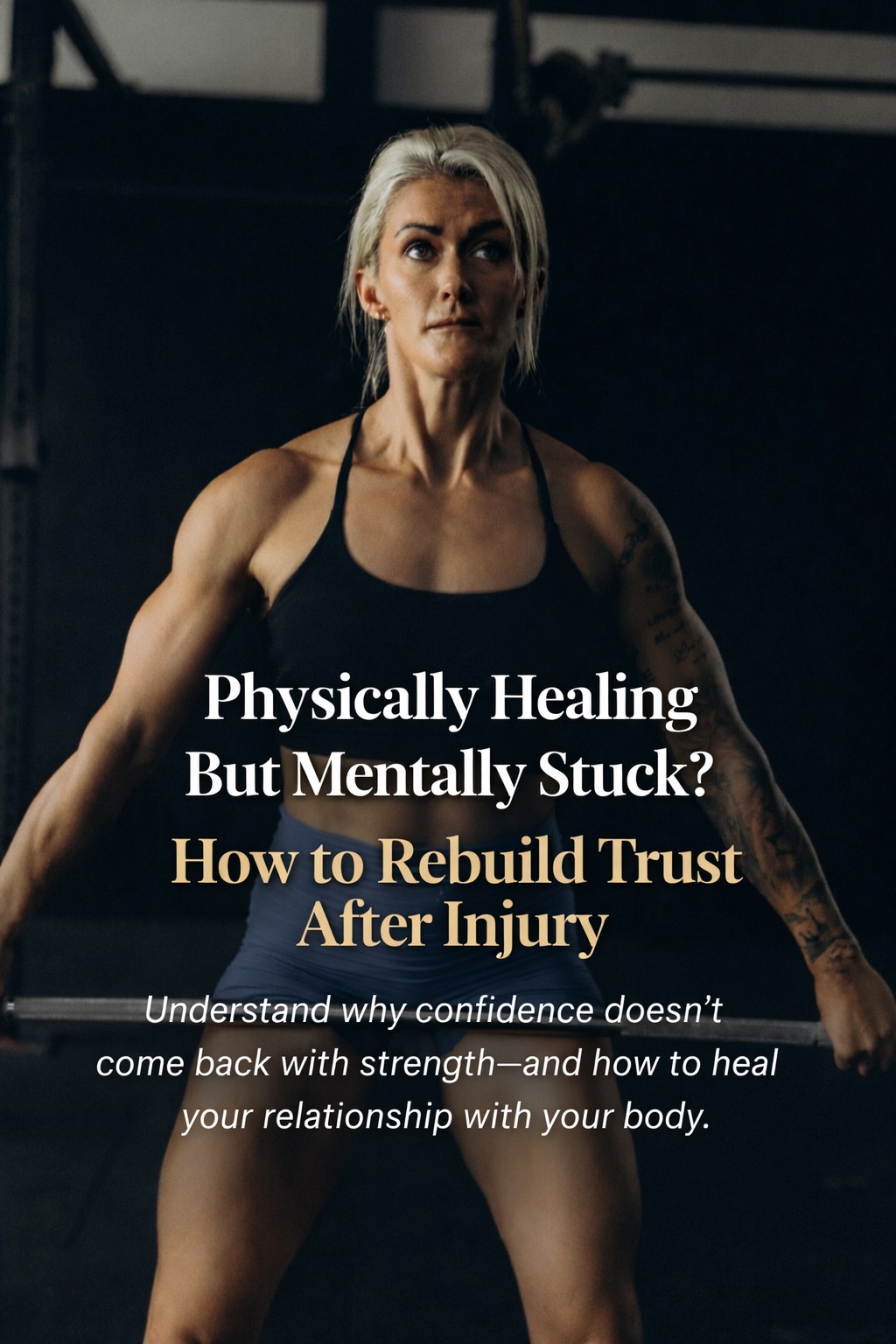

How to Rebuild Confidence After Injury (Without Rushing Your Body)
If you’ve ever said, “I know I’m physically okay, but I still don’t trust my body,” you’re not alone.
For many people, this is the most frustrating part of injury recovery.
Your strength is returning.
Your rehab is progressing.
You’re being told you’re “ready.”
And yet — something still feels off.
That hesitation isn’t weakness.
It’s information.
“Confidence isn’t rebuilt through courage — it’s rebuilt through repetition.”
Confidence Isn’t the Absence of Fear
One of the biggest myths in strength training after injury is that confidence comes back all at once.
It doesn’t.
Confidence isn’t about feeling fearless. It’s about trusting that you can respond if something feels wrong.
After injury — especially knee injuries like ACL tears — your body becomes protective. Movements that were once automatic now feel deliberate. Your nervous system is doing its job.
That doesn’t mean you’re not ready to train.
It means you’re rebuilding trust.
Why Confidence Drops After Injury
Confidence is lost for a few key reasons:
- Your body no longer feels predictable
- Movement requires conscious thought
- Fear of reinjury sits in the background
- Identity shifts after time away from training
This shows up across the board — whether you’re navigating ACL recovery training, returning to CrossFit workouts, rebuilding through Hyrox training, or easing back into postpartum fitness.
When confidence drops, many people assume they need more motivation.
What they actually need is safety and structure.
Why Pushing Harder Doesn’t Restore Confidence
This is where people get stuck.
They think confidence will return once they:
- Lift heavier
- Train harder
- Push through hesitation
But confidence doesn’t respond to force.
It responds to consistency and predictability.
When you rush intensity before trust is rebuilt, your nervous system stays on high alert — even if your muscles are capable.
This is why some people feel physically strong but mentally hesitant to train again.
Confidence Is Rebuilt Through Repetition, Not Courage
Here’s the reframe that changes everything:
Confidence is not a personality trait.
It’s a by-product of repeated safe experiences.
That means:
- Repeating movements that feel controlled
- Progressing gradually, not emotionally
- Letting quality lead load
- Training within ranges that feel safe — then expanding them
This applies whether you’re working through:
- ACL rehab exercises
- Strength training for beginners returning after injury
- Home-based workouts
- High-intensity training environments
Confidence grows when your body learns, “I’ve done this before — and I was okay.”
The Role of Strength Training in Confidence Building
Strength training is one of the most effective tools for rebuilding confidence — when it’s used correctly.
Not to prove toughness.
Not to rush timelines.
But to restore:
- Control
- Stability
- Coordination
- Trust
For ACL recovery, this might include:
- Controlled single-leg strength work
- Balance and stability training
- Progressive loading
- Intentional tempo
For postpartum or general injury recovery, it might look like:
- Re-learning foundational movement patterns
- Rebuilding core and hip stability
- Training with awareness instead of urgency
Strength training becomes less about numbers — and more about feedback.
“You don’t need to rush confidence. You need to rebuild trust.”
Measuring Progress Differently
One of the fastest ways to rebuild confidence is to change how you measure progress.
Instead of asking:
- “How much weight did I lift?”
- “How fast am I progressing?”
Ask:
- “Did this feel more controlled?”
- “Did my body feel safer today?”
- “Did I recover better afterward?”
These markers matter.
They’re signs that your nervous system is adapting — which is essential for long-term resilience.
Confidence Isn’t Linear (And That’s Normal)
Some days you’ll feel strong and capable.
Other days, hesitation will creep back in.
That doesn’t mean you’re regressing.
Confidence rebuilds in layers — just like strength.
The goal isn’t to eliminate fear.
It’s to stop letting fear make decisions for you.
This is where mindset training and mental toughness quietly support physical recovery.
Not ready yet? Download my free checklist: Signs You’re Ready to Progress — Mentally and Physically.
The Mental Side Is the Missing Piece
Most rehab plans focus on the physical checklist.
What they often miss is:
- Fear of reinjury
- Identity shifts
- Loss of trust
- Emotional fatigue
This is why people feel stuck even when they’re “doing everything right.”
Confidence doesn’t return just because your body is ready.
It returns when your mind and nervous system catch up.
A Supported Way Forward
If you’re physically progressing but mentally hesitant, nothing has gone wrong.
You’re simply in the middle stage of recovery — the part no one prepared you for.
This is the stage where:
- Guidance matters
- Structure helps
- And mindset support makes the difference
If you want a clear, supportive framework for rebuilding confidence after injury — mentally, not just physically — I’ve created a guide specifically for this phase of recovery.
It’s designed to help you understand what’s happening, why it makes sense, and how to move forward without rushing your body or forcing confidence.
You’re Not Behind — You’re Rebuilding
Confidence after injury isn’t something you wait for.
It’s something you rebuild — one safe, intentional step at a time.
And when you approach it that way, strength doesn’t just return.
It stays.
FAQ:
Frequently Asked Questions
Why do I still feel hesitant even though I’m physically cleared to train?
Because confidence depends on nervous system safety and trust — not just physical readiness.
How long does it take to rebuild confidence after injury?
Confidence rebuilds gradually through repeated safe experiences and varies for each person.
Can strength training help mental recovery after injury?
Yes. Intentional strength training restores control, predictability, and trust in your body.