
If you’re here, you’re probably trying to get back into fitness… but it doesn’t feel the same.
I’ve built a simple, structured comeback plan for exactly that:
rebuilding strength, confidence, and trust in your body after time off or injury.
How to Get Back Into Fitness When You Don’t Feel Like Yourself Anymore
You used to feel strong in your body.
Training was just something you did, it wasn’t something you had to think about. You knew how to move. You trusted yourself. You didn’t second guess every decision.
And then something shifted.
Maybe it was an injury.
Maybe it was pregnancy.
Maybe life just… got in the way.
Now you’re standing at the edge of getting back into fitness after a break — and it feels way harder than it should.
Not because you don’t know what to do.
But because you don’t feel like yourself anymore.
“The hardest part of getting back into fitness isn’t your body — it’s trusting it again.”
If you’re struggling with the mental side of this, read:
Physically Healing but Mentally Stuck? Why Returning After Injury Feels So Hard
Why Getting Back Into Fitness After a Break Feels So Hard
This is the part most advice completely misses.
Getting back into fitness after a break isn’t just physical.
It’s identity.
You’re not just rebuilding strength,
You’re trying to reconnect with a version of yourself that feels like it’s gone.
There’s a gap between:
who you used to be
and who you feel like now
And that gap creates:
- hesitation
- frustration
- self-doubt
- fear of re-injury
Psychologists often refer to this as identity disruption, when a major event (like injury) breaks the link between who you were and how you see yourself now.
That’s why this feels heavy.
Not weak.
The Biggest Mistakes People Make When Getting Back Into Fitness
If you’ve tried to start again before, chances are you’ve fallen into one of these.
Trying to Train Like Your Old Self
You go back in and expect your body to perform the way it used to.
It can’t. Not yet.
That doesn’t mean you’ve lost everything, it just means you need a different approach.
Doing Too Much, Too Soon
This is the fastest way to:
- burn out
- flare up an injury
- lose confidence again
Ignoring the Mental Side
You can be physically cleared…
…but still not feel safe in your body.
That hesitation? That matters.
Read more here:
How to Rebuild Confidence After Injury Without Rushing Your Body- Katelin Van Zyl’s Approach
How to Get Back Into Fitness After a Break (Step-by-Step)
This is where things shift.
Not by pushing harder,
But by approaching it differently.
Step 1 — Reset Your Expectations
You’re not starting from scratch.
But you’re also not where you were.
And that’s okay.
This phase is about rebuilding, not proving anything.
Step 2 — Focus on Movement, Not Performance
Before intensity, before weight…
You need to feel:
- controlled
- stable
- connected
That’s what creates confidence again.
Step 3 — Train for Safety, Not Ego
This is where most people get it wrong.
They chase:
❌ numbers
❌ intensity
❌ “feeling like themselves again”
Instead of:
creating a body that feels safe to move in
Step 4 — Build Consistency First
Confidence doesn’t come from one good session.
It comes from showing up repeatedly and realising:
“I’m okay doing this again”
Step 5 — Let Confidence Catch Up
Confidence is not the starting point.
It’s the result.

Why Confidence Doesn’t Come Back Straight Away
This is the part no one explains properly.
Even when your body is improving…
Your nervous system might still be in protection mode.
That’s why you hesitate.
That’s why you second guess.
That’s why things feel off.
According to research in pain science and neurobiology, your brain prioritises safety over performance, even after healing has occurred.
You’re not broken.
Your body is just trying to protect you.
Read more:
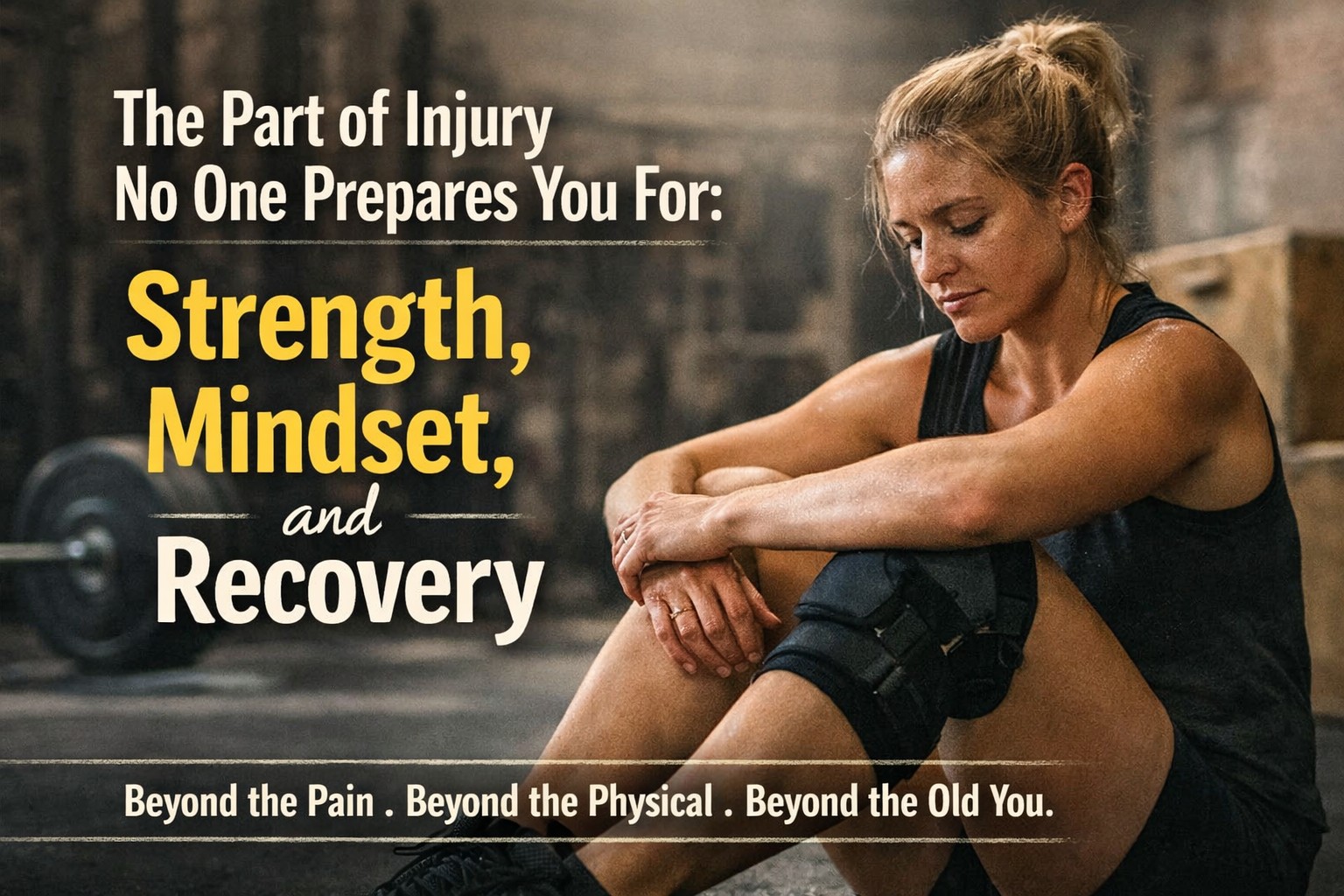
The Part of Injury No One Prepares You For: Strength, Mindset, and Recovery
What Your First Few Weeks Back Should Actually Look Like
Forget perfection.
This phase should look like:
- shorter sessions
- controlled movement
- low pressure
- building routine
You should leave sessions feeling:
better than when you started
Not destroyed
What Most Advice Gets Wrong (And What Actually Helped Me)
This is where I see people struggle the most.
The industry pushes:
“just get back into it”
“push through it”
“you’ll get it back quickly”
That’s not reality.
What actually works is:
- slowing down
- rebuilding properly
- respecting your body
- and not rushing the process
For me, coming back from ACL surgery, a hernia, and even a broken jaw…
The biggest shift wasn’t physical.
It was learning to:
trust myself again
That’s what changed everything.
How to Know You’re Ready to Progress
You don’t measure readiness by:
❌ strength alone
You measure it by:
- consistency
- confidence
- how your body feels
When movement feels:
✔ controlled
✔ repeatable
✔ safe
That’s when you build.
If You’re Ready to Get Back Into Fitness Properly
You don’t have to figure this out on your own.
If you’re sitting here thinking:
“this is exactly where I’m at”
Then the next step is simple.
Join the waitlist for the upcoming opportunities to work with Katelin:
(A structured comeback plan to rebuild strength, confidence, and trust in your body)
FAQ — Getting Back Into Fitness After a Break
How long does it take to get back into fitness after a break?
It depends on your starting point, but consistency matters more than speed. Most people see progress within 4–6 weeks.
Can I exercise after injury?
Yes, but it needs to be structured and progressive, not rushed.
Why do I feel weak after time off?
Because your body has adapted to doing less, but it rebuilds faster than you think.
How do I stop being scared to work out again?
Start small. Build trust through repetition. Confidence follows action.
If you’d rather hear this in my own words — I explain it here.
This is where most people get stuck — not because they don’t know what to do, but because it doesn’t feel safe to do it yet.